Fence Estimate Template
Deliver Professional Fence Estimates That Clients Approve Faster
Fence projects require precise measurements, material calculations, and clear pricing. A well-structured estimate helps homeowners and property managers understand the project and approve your bid with confidence. This free Fence Estimate Template helps fencing contractors create organized, line-item estimates that protect profit margins and present pricing professionally. Whether you're installing wood, vinyl, aluminum, or chain-link fencing, this template gives you a reliable system for quoting jobs.

What Goes Into a Good Fence Estimate?
A good fence estimate clearly outlines materials, labor, and installation scope so clients understand exactly what they are paying for.
This template helps you include:
- Fence type (wood, vinyl, aluminum, chain-link, etc.)
- Linear footage and panel quantities
- Posts, rails, gates, and hardware
- Labor and installation costs
- Removal of existing fencing
- Concrete, fasteners, and materials
- Overhead and markup
Clear line items reduce confusion and help protect your margins.
Why Detailed Fence Estimates Improve Close Rates
When homeowners compare fencing quotes, presentation matters. A clean, organized estimate immediately communicates professionalism.
Using a structured fence estimate template helps you:
- Present clear, easy-to-understand pricing
- Define installation scope
- Reduce back-and-forth questions
- Apply consistent markup
- Increase confidence during the sales process
Professional estimates help clients feel confident choosing your company.
Fence Estimate Template Overview
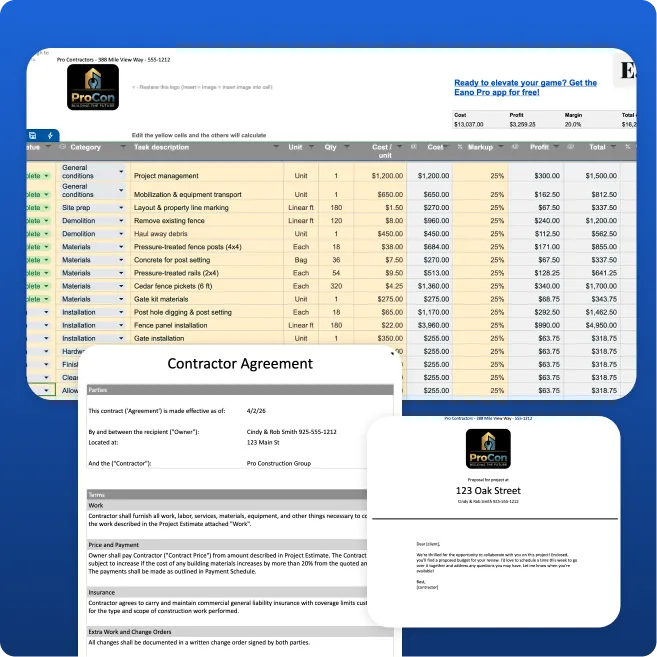
This free Fence Estimate Template is delivered as a fully customizable Google Sheets file designed to manage your entire estimating and proposal workflow — not just calculate a price.
Inside the template, you’ll be able to:
1. Build Detailed Fence Estimates with Profit Visibility
Use the main estimating worksheet to enter:
- Fence materials and components
- Linear footage or panel quantities
- Labor hours and installation costs
- Equipment or removal costs
- Markup percentage
The template automatically calculates totals and projected profit so you can verify margins before sending your estimate.
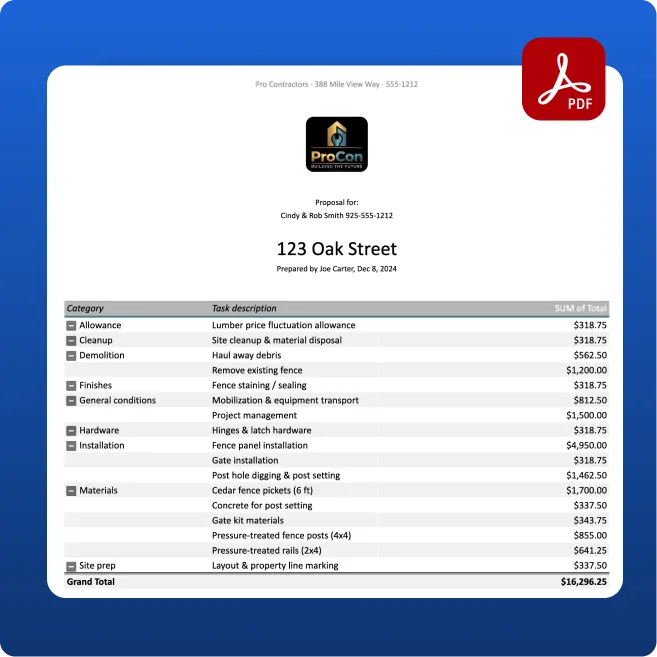
2. Generate a Client-Facing Estimate (PDF Ready)
Once pricing is finalized, the template automatically generates a clean, professional estimate formatted for your client.
Internal cost breakdowns remain separate while your client receives a clear summary of scope and pricing. Export it to PDF and send it for quick approval.
3. Organize Cost Categories for Repeatable Estimates
Fence projects often include multiple material types and installation phases.
This template allows you to organize reusable categories such as:
- Materials
- Labor
- Gates & Hardware
- Removal & Disposal
- Equipment
- Miscellaneous
This structure makes estimates easier to duplicate for future fence installations.
4. Automatically Generate an Invoice
The template includes a connected invoice sheet tied directly to your estimate.
When the project status in the worksheet is updated to “Completed,” the invoice amount updates automatically — eliminating double entry and saving administrative time.
5. Include a Customizable Contract
A built-in contract template allows you to outline installation terms, property access requirements, material warranties, and payment schedules.
Customize it once and reuse it across future fence projects.
6. Deliver a Complete Client Proposal
Everything rolls into a professional proposal package that includes:
- Cover letter
- Company introduction
- Space for project photos
- Scope of work
- Estimate
- Payment schedule
- Contract
Instead of sending a simple quote, you present a structured proposal that builds trust and improves close rates.