
The Most Common Estimating Mistakes in Landscape Construction
Every dollar missed in an estimate is a dollar lost on the job. IBISWorld puts the U.S. landscaping services industry at roughly $188.8 billion in annual revenue as of 2025, and in a market that size, tight margins mean every estimating mistake matters more than it might on a single, isolated job.
The mistakes themselves are rarely dramatic. They're small, repeatable, and easy to miss on any one bid — which is exactly why they're worth naming specifically rather than treating as bad luck.
The stakes are asymmetric, too. A landscape contractor who underbids a job by a few hundred dollars in labor doesn't just lose that margin — they lose it on a job they now have to complete regardless, often while a competitor who bid the job accurately walks away with a project that actually pays for itself. Multiply that across a season of bids and the pattern becomes the difference between a profitable year and one that merely broke even.
Why Estimating Goes Wrong in Landscape Projects
Estimating landscaping work sounds simple — measure, add up materials, figure out labor. But anyone who's done it knows the headaches: overlooked site prep, misread plans, surprise change orders, and late supplier pricing. Mistakes are common. They're also costly. Most contractors don't have the time to double-check every detail, especially when juggling multiple bids and ongoing jobs.
The pressure compounds during peak season, when a single estimator might be turning around five or six bids in a week alongside managing active jobs. Under that kind of volume, the shortcuts that seem harmless in isolation — skipping a site visit because the plans look straightforward, reusing last year's material pricing because there's no time to call the supplier — become the default rather than the exception, and that's exactly when the costliest mistakes tend to happen.
Common Pitfalls That Hurt Your Bottom Line
The cost doesn't stay contained to the office, either. A crew sent out to complete a job that was underbid on labor still has to finish it — which usually means working faster under more pressure, cutting corners that shouldn't be cut, or eating into overtime that was never priced into the job in the first place. Estimating mistakes get passed downstream to the people executing the work, not just absorbed as a line on a spreadsheet.
A handful of mistakes account for most of the margin lost at the estimating stage:
- Underestimating labor: landscape crews often run into unexpected site conditions, from hidden roots to tough grading. A single missed hour per crew, per day, adds up fast across a multi-day job.
- Material overages and shortages: miscalculating mulch, pavers, or irrigation supplies leads to expensive change orders and wasted trips to the supplier.
- Overlooking indirect costs: equipment rentals, fuel, insurance, and administrative overhead can be easy to forget, but they erode margins when they're not in the estimate.
- Inconsistent processes: when each estimator approaches bids differently, mistakes slip through, and pricing isn't consistent from one job to the next.
None of these mistakes are unique to inexperienced estimators. An experienced estimator working from memory and a spreadsheet under deadline pressure makes the same kinds of errors as someone newer to the job — the difference is usually just frequency, not immunity.
Taken individually, each of these mistakes might shave a few percentage points off a single job's margin. Taken together, across a full season of bids, they're often the difference between a landscape business that grows year over year and one that treads water — busy every summer, but never quite building the reserve that would let it take on bigger projects or hire ahead of demand.
How Landscape Construction Management Software Reduces Risk
It's tough to catch every mistake when you're working from spreadsheets or hand-written notes. That's where purpose-built solutions like landscape construction management software come in. By centralizing project details, costs, and scope in one place, this technology helps contractors:
- Standardize estimating templates, so every quote starts with the right scope and nothing gets missed.
- Pull real-time material pricing straight from suppliers or internal databases, reducing manual errors.
- Track historical job costs, making it easier to benchmark and spot red flags based on past performance.
- Automate change order tracking so all extras are billed properly.
One trusted option for landscapers is AI-assisted estimating built for construction and landscape work, which lets you build estimates based on actual job data, not guesswork. With everything in one system, you spend less time chasing numbers and more time focusing on profitable growth.
The shift from manual to software-assisted estimating tends to pay off fastest in the busiest weeks of the season — precisely when there's the least time available to double-check a bid by hand. A standardized template and real-time pricing don't just reduce errors; they reduce the amount of attention a rushed estimate needs to still come out accurate.
Avoiding Hidden Costs with Better Workflows
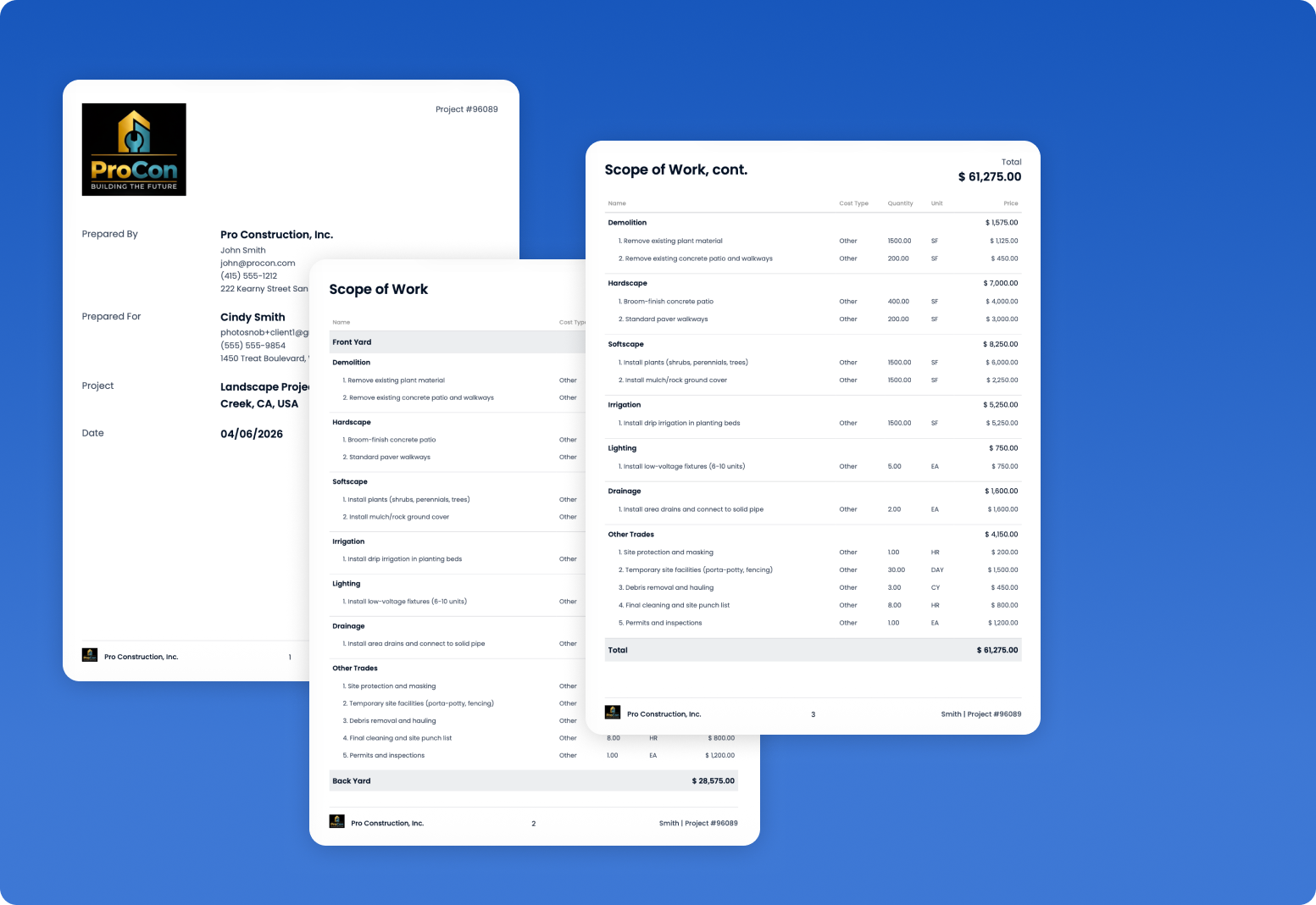
Estimating isn't just about line items — it's about process. Errors creep in when information gets lost between sales, estimating, and project management. Construction management platforms like Eano Pro keep every step of the job connected. With clear, repeatable workflows, handoffs are smoother and fewer details get missed.
A useful way to think about this: most estimating mistakes don't happen because someone lacked the knowledge to price a line item correctly. They happen because a piece of information — a site condition noted during the walkthrough, a supplier price that changed last week — didn't make it from wherever it was captured into the actual estimate. Fixing that gap is a workflow problem more than a skills problem.
This is also where a lot of the tension between the office and the field actually originates. A project manager who flags a site condition during a walkthrough has done their job the moment they mention it out loud — but if that detail lives only in a text message or a mental note, it never reaches whoever is finalizing the number. The fix isn't asking people to communicate more; it's making sure the information they already share has one place to land.
Streamlining Approvals with Landscape Construction Management Software
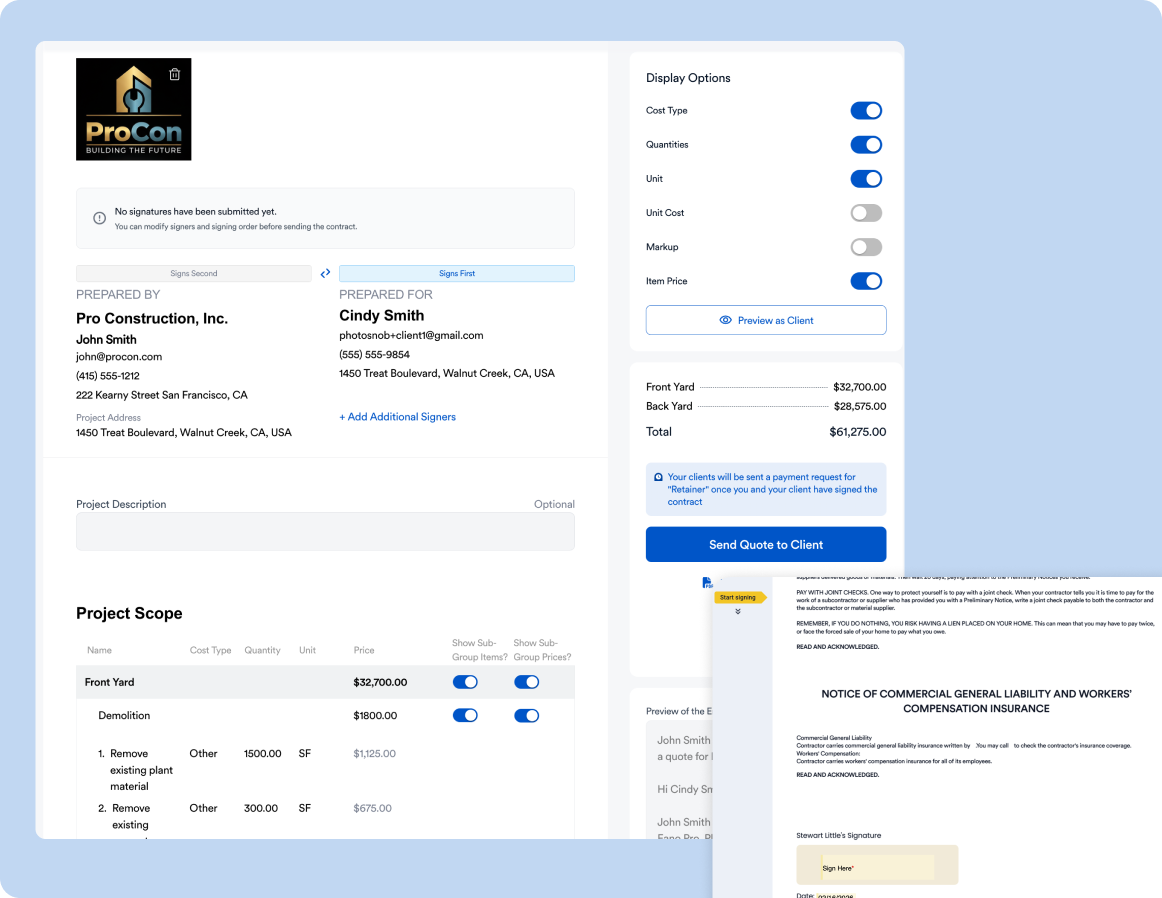
When a bid goes out, everyone needs to be on the same page. Delays in approvals or unclear documentation can kill momentum or even cost you the job. With landscape construction management software, your team can review, adjust, and approve bids in real time — no more email chains or missing attachments. This cuts down on bottlenecks and helps you react faster to client feedback.
Approval speed matters more in landscaping than it might in other trades, because a lot of residential landscape work is seasonal and weather-dependent. A bid that sits in a client's inbox for a week during peak planting season isn't just a slow sale — it can mean missing the window entirely, pushing the job to a competitor who can start sooner or to next season altogether.
Real-Time Data Improves Future Estimates
Tracking project performance isn't just for job costing — it shapes your next estimate. By analyzing real job data, you can spot trends, see where you consistently underbid, and adjust for future projects. The right software makes these insights visible and actionable, so your bids only get sharper over time.
This is where a lot of landscape contractors leave real money on the table without realizing it. A crew that consistently runs long on grading work, or a material that consistently costs more than the estimate assumed, is a pattern — but it only becomes visible if job costs actually get compared back against the original estimate after the fact, rather than the estimate being filed away the moment the job starts.
This kind of feedback loop is easy to skip when things are busy, which is exactly when it matters most. A contractor who's slammed with work rarely has the bandwidth to sit down and compare bids against actual costs — but that's precisely the season generating the most data worth learning from. Building the comparison into the normal workflow, rather than treating it as a separate task, is what actually makes it happen.
Why Contractors Trust Eano Pro
Eano Pro is built for busy contractors who need estimating to be fast, accurate, and easy to manage. With features designed for landscape construction, it streamlines estimates, tracks actual costs, and connects the field to the office. You get a clear view of your numbers, better control over every project, and peace of mind knowing mistakes are less likely to slip through the cracks.
Specifically for the mistakes outlined above, Eano Pro addresses each one directly rather than generically. Standardized templates close the inconsistent-process gap by giving every estimator the same starting structure. Current material pricing pulled into the estimate closes the overage-and-shortage gap. Built-in labor benchmarks from past jobs give an estimator a real number to check an unusual site condition against, instead of a gut-feel guess. And because indirect costs — equipment, fuel, overhead — are part of the same template rather than a separate mental checklist, they don't depend on any one estimator remembering to add them every time.
The time savings compound in a way that's easy to underestimate up front. An estimator who used to spend forty-five minutes assembling a bid from a spreadsheet and a stack of supplier quotes might get that down to fifteen with a standardized, software-assisted process — and across a season with fifty or sixty bids, that difference is the equivalent of adding several full workdays back to the calendar, without hiring anyone new.
What to Look for Before Switching Tools
Not every estimating tool marketed to contractors was actually built with landscape work in mind. A generic construction estimating platform might handle square footage and labor hours fine, but stumble on plant material takeoffs, irrigation zone calculations, or the seasonal pricing swings common to mulch, sod, and nursery stock. Before switching, it's worth confirming that a platform's templates and pricing databases actually reflect landscape-specific line items, not just general construction categories repurposed for the trade.
Onboarding time matters too, especially for a small crew where the estimator is often also running jobs. A tool that takes weeks to configure before it produces a usable bid isn't solving the time problem it was bought to solve — it's just moving the time cost earlier. The better question during any demo is how long it takes to produce one real bid from that contractor's own recent job, not how many features the platform lists on its pricing page.
A reasonable way to test any of this without betting the whole season on it: run the new tool alongside the old process for a handful of bids first. Compare the numbers each method produces for the same job, and see where they diverge. In most cases, the gap traces back to exactly the kind of mistake outlined above — a labor hour that got rounded down, a material quantity pulled from memory instead of a current price list. That side-by-side comparison tends to make the case for switching more convincingly than any features list could.
For more on how connected data changes the accuracy of an estimate over time, see how other landscape contractors are managing multiple landscape jobs without losing track, and what typically causes landscape projects to fall behind schedule in the first place.
Ready to Tighten Up Your Estimates?
Ready to see how Eano Pro can help you win more profitable landscape projects? Book a demo now and get a firsthand look at what smarter estimating can do for your business.