

Improving Estimating Accuracy and Profitability
Most contractors don't lose money because of one big mistake.
They lose it in small ways that don't feel obvious at the time.
A line item gets missed. Labor runs a little longer than expected. Material pricing is slightly outdated. A subcontractor number comes in higher than what was originally assumed.
None of those things feel catastrophic on their own. But by the time the job wraps up, the margin you thought you had is gone—or at least thinner than it should be.
Estimating is where profitability starts. And when it's inconsistent or rushed, everything downstream becomes harder to control.
Why Estimating Is Harder Than It Looks
From the outside, estimating seems straightforward. Measure the work, apply costs, add markup, and send the proposal.
In reality, it's a mix of experience, judgment, and systems—and most contractors are relying heavily on the first two.
You're pulling from past jobs, gut feel, vendor pricing, and whatever notes you've kept along the way. Some estimates are built carefully. Others get rushed because you're trying to turn around bids quickly.
And when you're juggling multiple projects, it's easy for details to slip.
The challenge isn't that contractors don't know how to estimate—it's that the process isn't always consistent. There's not one single element that contributes to better estimates, but an ecosystem that allows for data capture, a feedback loop, and communication. The benefits of a construction management system start to weigh in, which enables accurate and scalable estimating to contain the elements you need.
Where Estimates Typically Break Down
If you look at jobs that underperform financially, the issue often traces back to the estimate.
Not because it was wildly wrong, but because of small gaps:
- Scope that wasn't fully captured
- Labor that was slightly underestimated
- Materials that increased in price
- Missing costs like permits, equipment, or disposal
- Subcontractor numbers that changed after the bid
Individually, these feel manageable. But they stack.
And once the job is underway, it's difficult to recover from those early assumptions.
The Hidden Risk of "Fast Estimates"
Speed matters—especially when you're competing for jobs.
But fast estimates often come at the expense of structure.
When you're building estimates from scratch every time, or copying from old spreadsheets and tweaking them, you introduce variability. Two similar jobs can end up priced very differently depending on how the estimate was built.
That inconsistency is what makes profitability unpredictable.
It's not that you're underpricing every job—it's that you don't always know which ones you are until it's too late.
Where Scope Actually Gets Captured
A lot of the gaps above trace back to a single moment: the site visit. Whatever gets noticed, measured, and written down during that walkthrough is the ceiling on how accurate the estimate can be — no amount of careful pricing afterward fixes a scope that was never fully captured in the first place.
That's part of what Eano Pro's AI Video Estimator is built to address. Walking the site with a phone camera and letting that footage generate a structured, line-itemized starting point means less depends on what one person remembers to jot down, and more of the scope is captured the moment it's actually in front of you.
What Better Estimating Actually Looks Like
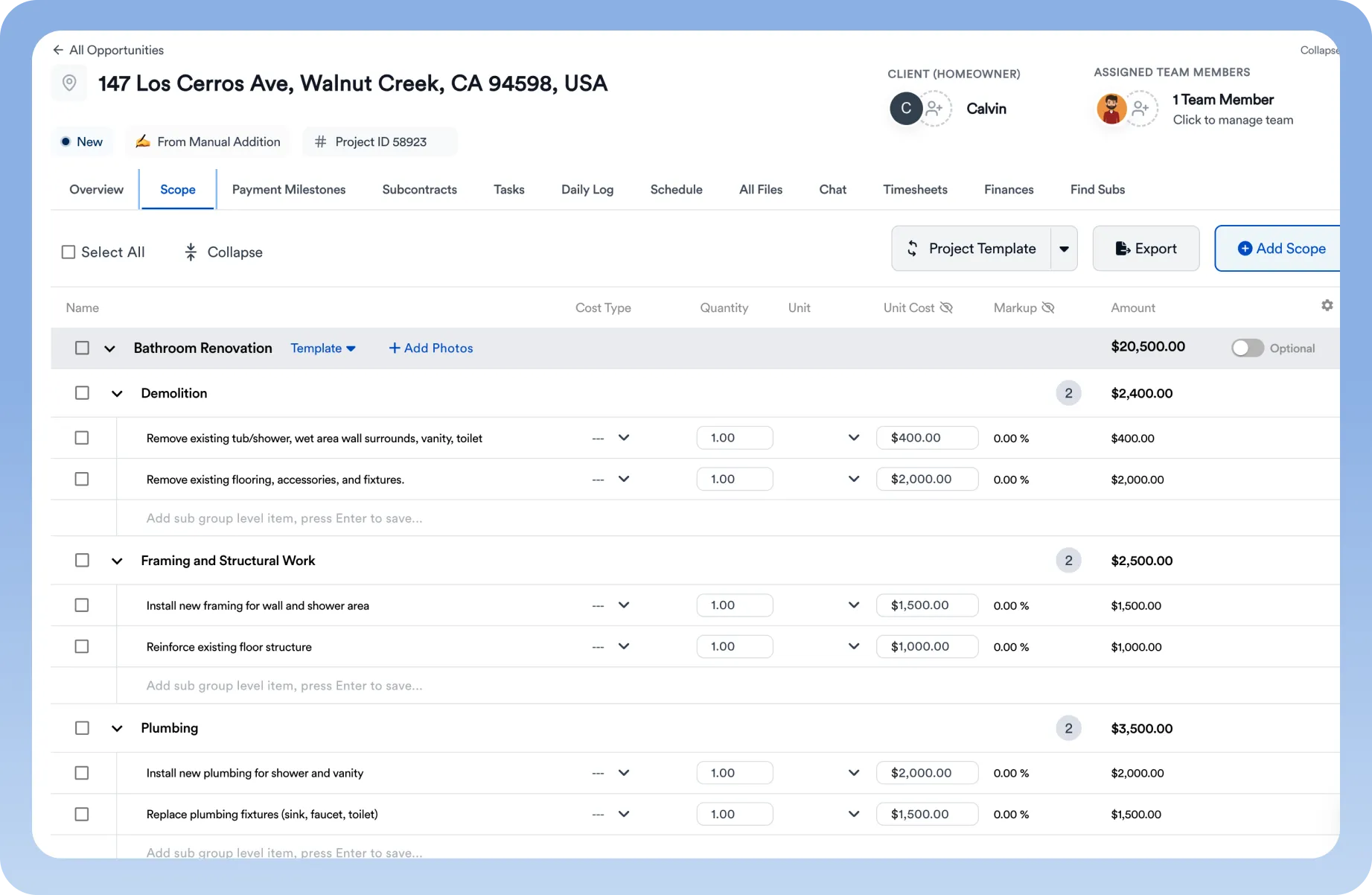
Better estimating doesn't mean more complexity. It means more consistency.
At a practical level, that usually includes:
- Standardized templates so you're not starting from zero
- Clear cost categories that capture the full scope of work
- Updated pricing that reflects current conditions
- A repeatable process that doesn't depend on memory
When those pieces are in place, estimating becomes less about guessing and more about refining.
Why Accuracy Isn't Just About Numbers
It's easy to think of estimating accuracy as purely a numbers problem.
But a lot of accuracy comes from structure.
If your estimate is organized clearly:
- It's easier to spot missing scope
- It's easier to compare jobs
- It's easier to explain pricing to clients
And just as important, it's easier to carry that estimate into the actual project.
Because an estimate that lives in isolation—separate from how the job is managed—often gets lost once work begins.
The Disconnect Between Estimate and Execution
One of the biggest issues contractors run into is that estimating and project management are handled in separate systems.
You build an estimate in a spreadsheet, send a proposal, win the job—and then essentially start over when it's time to execute.
That disconnect creates problems:
- Line items get lost or simplified
- Scope details don't carry over
- Budgets become harder to track against actuals
So even if the estimate was solid, the job doesn't necessarily follow it.
And that's where margins start to drift.
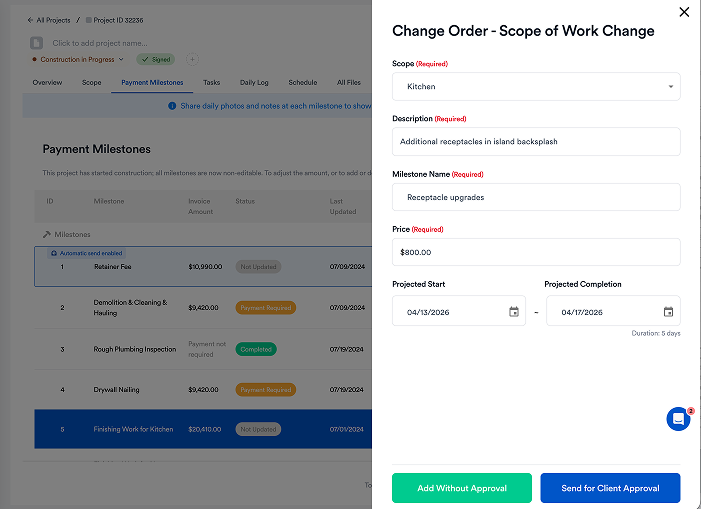
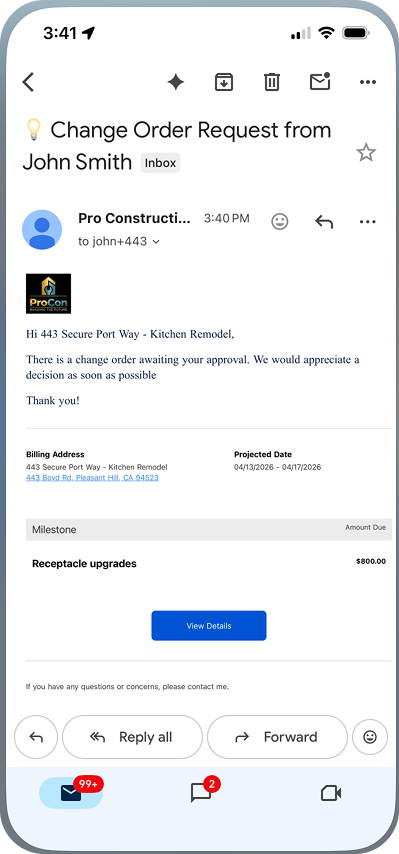
And when that drift happens, which is pretty common, you can stay on top of it using construction change orders–surfacing the increase in cost, getting approval, and moving on.
What Happens When Estimates Stay Connected
When estimating is tied directly to the project, things start to line up differently.
The estimate becomes more than just a number—it becomes the foundation for:
- Scheduling
- Task management
- Budget tracking
Instead of rebuilding the job from memory, you're working from something that's already been structured.
That makes it easier to:
- Stay aligned with the original scope
- Track how the job is performing
- Catch issues earlier
And over time, it gives you better feedback on how accurate your estimates actually are.
A Scenario Most Contractors Recognize
A contractor bidding multiple remodels each month noticed that some jobs performed well, while others felt tight—even when they seemed similar on paper.
After digging into it, the issue wasn't obvious mistakes. It was inconsistency.
Some estimates were detailed and built from a solid template. Others were rushed and based on previous jobs without fully adjusting for differences.
Once they standardized their estimating process, something interesting happened. It didn't necessarily take more time—it just became more predictable.
Margins stabilized. Fewer surprises showed up during the job. And pricing conversations with clients became easier, because the numbers were easier to explain.
How Construction Management Software Improves Estimating
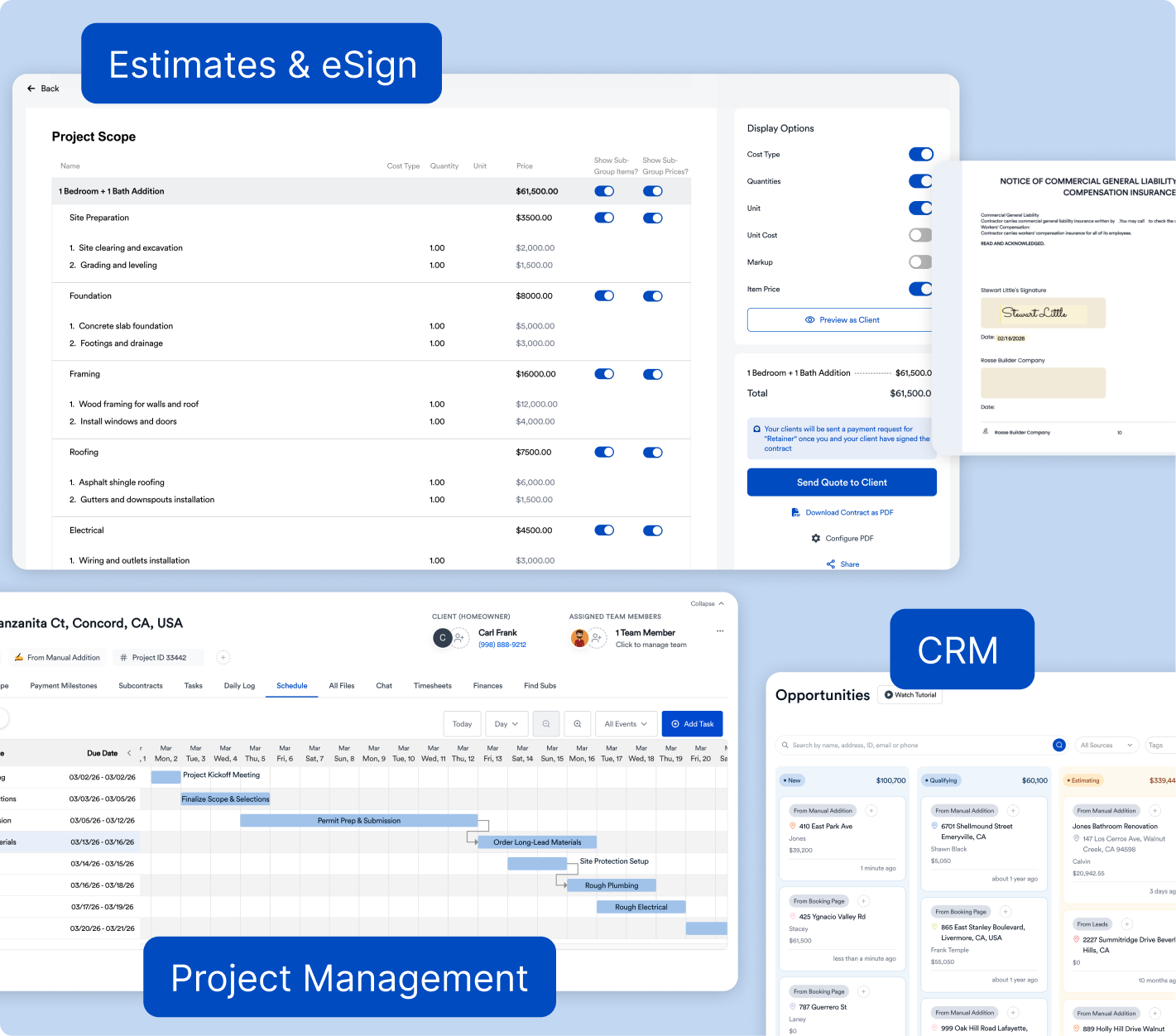
Construction management software improves estimating by bringing structure and consistency into the process—and by connecting it to everything that happens after.
Instead of building estimates in isolation, you're working within a system that:
- Stores cost data
- Organizes line items
- Keeps pricing consistent across jobs
That alone reduces a lot of variability.
But the bigger advantage is what happens after the estimate is done.
When estimates flow directly into project execution, you're no longer relying on memory to carry details forward. The information is already there, tied to the job. For a broader look at how estimating, scheduling, and job costing fit together as a category, see our guide to what AI construction management software actually does.
How Eano Pro Helps Improve Accuracy and Profitability
Eano Pro is built around this idea of connected workflows.
On the estimating side, it allows you to build structured, repeatable estimates with clear line items, labor, and material costs. You're not starting from scratch every time, which helps maintain consistency across jobs.
It also includes AI-assisted estimating, which can help generate scope and line items faster—especially useful when you're trying to turn around bids quickly without cutting corners.
But where it really starts to make a difference is after the estimate.
Because estimates in Eano Pro don't just sit as standalone documents. They connect directly to:
- Project tasks
- Schedules
- Budgets
So the job you run actually reflects the job you priced.
That alignment is what helps protect margins.
What This Changes Day to Day
When your estimating process becomes more consistent, a few things start to shift.
You spend less time second-guessing numbers before sending a bid. You're not constantly rebuilding estimates from scratch or digging through old files trying to find something close.
Once the job starts, there's less confusion about scope and fewer surprises around cost.
And over time, you start to develop a clearer sense of how your jobs perform—because the data is more consistent from one project to the next.
Why This Matters More as You Grow
As your business grows, estimating becomes harder to manage informally.
More bids, more variation in projects, more people involved in building estimates—it all increases the chance of inconsistency.
Without a system, you end up with:
- Different people estimating in different ways
- Pricing that varies more than it should
- Less visibility into actual margins
At that point, growth can actually make profitability less predictable.
With a more structured approach, estimating becomes something you can scale. It doesn't rely entirely on one person's memory or experience—it becomes part of how the business operates.
Final Thought
Estimating is where every job begins, and it sets the tone for everything that follows.
When estimates are inconsistent or disconnected from how work is actually executed, it becomes difficult to control costs and protect margins. Small gaps in scope or pricing may not seem significant at the time, but they tend to show up later when it's harder to adjust.
By building a more structured and connected estimating process, contractors can reduce variability, improve accuracy, and gain a clearer understanding of how their jobs perform. The goal isn't to make estimating more complicated—it's to make it more reliable, so that each project starts on a stronger foundation.
Ready to see what a more connected estimating process looks like for your business? Book a demo with Eano Pro.