
Go Slow to Go Fast: How One Contractor Increased Signed Deal Velocity 4.5× in Four Months
"We're slammed right now."
It's one of the most common reasons contractors give for postponing a software demo.
The response is understandable. Between jobsite visits, homeowner meetings, estimating, scheduling crews, managing subcontractors, and solving daily problems, finding thirty minutes to evaluate a new system can feel impossible.
But that's also what makes it so costly.
The businesses that are too busy to improve their processes are often the same businesses spending hours every week on work that no longer needs to be done manually. Estimates get rebuilt from scratch. Proposals move through multiple systems. Customer information lives in spreadsheets, inboxes, and text messages. Signatures take days—or weeks—to collect.
The result isn't just wasted time. It's slower growth.
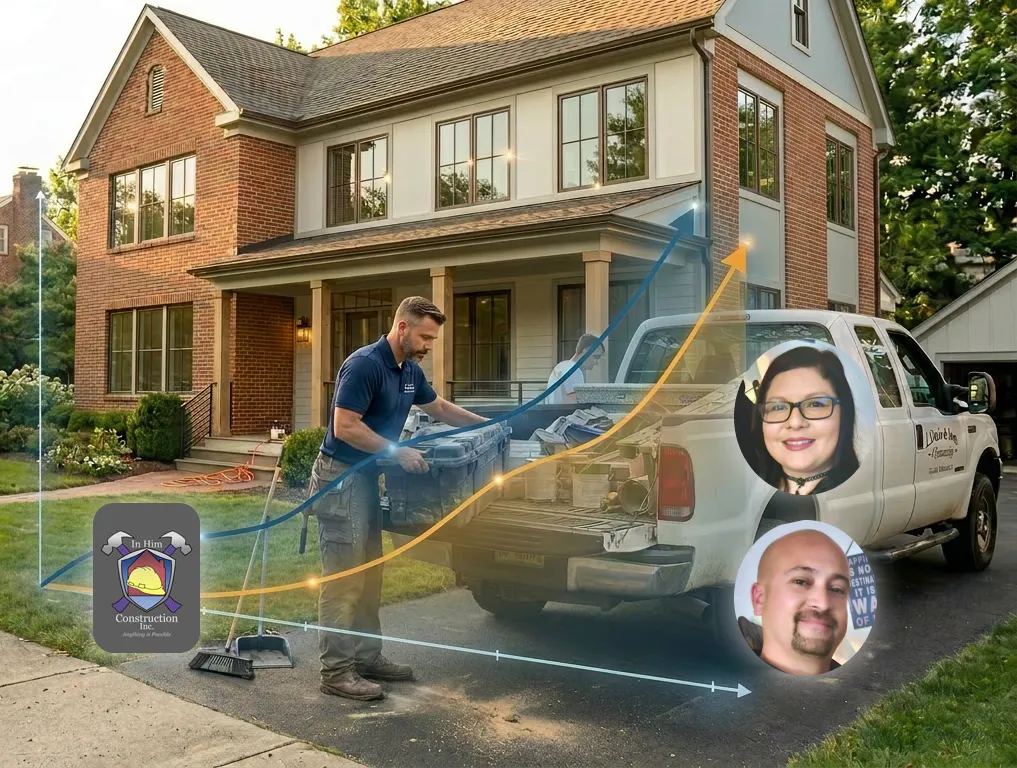
In Him Construction, a residential general contractor serving Los Angeles County and the San Gabriel Valley, faced many of those same challenges. In late 2025, they made the decision to invest time into changing how their business operated.
Four months later, the numbers looked dramatically different.
From Learning Mode to Full Production
In Him signed up for Eano at the end of September 2025.
Like most contractors, they didn't immediately transform their operation overnight. October and November were spent learning the platform on active projects while continuing to run the business. December brought the usual holiday slowdown, and January marked the beginning of full production using the new workflow.
That timeline is important because it highlights something many contractors overlook: meaningful operational improvements take time. The goal isn't to save time on day one. The goal is to build a system that saves time every day afterward.
By April, the investment was beginning to pay off.
What Happened in Four Months?
The most obvious changes showed up in contract volume and deal size.
The chart below indexes January as 100 and tracks how activity changed over the following months.
| Month | Contracts Signed | Median Deal Value | Average Deal Value | Total Signed Value |
|---|---|---|---|---|
| Jan 2026* | 100 | 100 | 100 | 100 |
| Feb 2026 | 300 | 442 | 950 | 2,846 |
| Mar 2026 | 275 | 340 | 1,077 | 2,953 |
| Apr 2026 | 450 | 431 | 472 | 2,118 |
*January reflects a partial month beginning January 20, 2026. Each metric is independently indexed to January = 100.
January is indexed to 100 and serves as the baseline for comparison. January reflects a partial month beginning January 20, 2026.
Looking at the data, three trends stand out immediately.
First, signed contract velocity increased significantly. By April, In Him was signing contracts at 4.5 times the pace of January.
Second, average deal size grew alongside contract volume. The business wasn't simply taking on more work—it was closing larger projects as well. Average signed contract value increased 4.7× over the same period, while median deal value increased 4.3×.
Third, total signed contract value rose dramatically, demonstrating that growth wasn't being driven by isolated outlier projects. The entire operation was becoming more productive.
These Weren't Small Jobs
Whenever contractors hear a growth story, the natural reaction is skepticism.
Maybe the company was signing a lot of small projects.
Maybe they landed a single large job that distorted the numbers.
Maybe the estimates weren't detailed.
That wasn't the case.
The contracts being signed through Eano were detailed, line-itemized residential construction projects.
Examples included:
- A Monrovia project with 32 scope line items that became the largest contract signed during the reporting period.
- A West Covina remodel containing 80 scope items.
- A Covina project with 54 line items.
- A Sierra Madre remodel with 45 line items.
- A San Dimas project with 36 line items.
These were not one-page proposals with broad allowances. They were fully scoped construction contracts designed to clearly communicate work, pricing, and expectations to homeowners.
Homeowners Moved Faster
One of the most interesting findings wasn't how many contracts were signed—it was how quickly they were signed.
Most contractors are familiar with the traditional approval cycle. A proposal is emailed. The homeowner reviews it. Questions are exchanged. A revised copy is sent. A separate signature request follows. Eventually, after multiple touchpoints, the project moves forward.
In Him's data showed a different pattern.
| Month | Contracts (Indexed) | Median Time to Sign | % Signed Within 24 Hours |
|---|---|---|---|
| Jan 2026 | 100 | ~14 hours | 75% |
| Feb 2026 | 300 | ~10 days | 33% |
| Mar 2026 | 275 | ~4 days | 36% |
| Apr 2026 | 450 | ~3 days | 33% |
January reflects a partial month beginning January 20, 2026. Contract counts are indexed to January = 100. Median time to sign represents the midpoint time between proposal delivery and homeowner signature.
Based on 48 homeowner contracts signed through Eano between January and early May 2026.
Approximately one-third of homeowner contracts were signed the same day they were presented.
The remaining contracts were typically signed within days rather than weeks.
For a growing construction company, that matters. Faster approvals improve scheduling, reduce uncertainty, accelerate cash flow, and allow teams to forecast future work more accurately.
What Actually Changed?
The numbers are impressive, but they are ultimately the result of operational improvements happening beneath the surface.
Software alone doesn't create growth.
What creates growth is removing friction from the way work moves through the business.
Estimating Became Repeatable
Before implementing a structured system, estimating looked much like it does for many contractors today. Every new proposal required gathering information from previous jobs, updating pricing, adjusting scope language, and manually assembling documents.
That process works—but it consumes time.
As In Him built reusable scope items, cost libraries, templates, and supplier relationships inside Eano, estimating became increasingly repeatable. Instead of rebuilding information from scratch, the team could start from proven structures and focus on refining project-specific details.
By spring, detailed scopes that once required hours could be assembled in a fraction of the time.
The estimates didn't become simpler.
They became more detailed while requiring less effort to produce.
That shift is exactly what tools like Eano Pro's AI Video Estimator are designed to accelerate even further—turning a phone-camera site walk into a structured, line-itemized starting point instead of a blank estimate built from memory.
The Team Started Working From One Source of Truth
Growing construction businesses often struggle with information fragmentation.
Customer notes live in email threads. Pricing lives in spreadsheets. Scope revisions happen through text messages. Project managers and ownership sometimes work from different versions of the same information.
None of those issues seem significant on their own. Together, however, they create countless delays that slow projects down.
By the end of November, nine people across ownership, project management, and field operations were working from the same customer records, scopes, project information, and financial data.
That alignment reduced duplicate work, eliminated confusion, and made it easier for the entire organization to operate as a team rather than a collection of individuals.
Vendor Pricing Became Easier to Manage
Material pricing changes constantly, and relying on memory is rarely a sustainable strategy.
Over time, In Him built a supplier network directly inside its workflow that included major retailers such as Home Depot, Lowe's, and Floor & Decor, along with local vendors covering cabinetry, countertops, paint, lumber, electrical supplies, disposal services, and cleaning services.
Instead of searching for information across multiple systems, estimators could reference supplier pricing while building proposals.
The result was greater consistency, improved visibility into costs, and more confidence in project margins.
Proposal, Contract, and Signature Became One Workflow
Many contractors still use separate tools for estimating, proposals, contracts, and signatures.
Every handoff creates friction.
Every additional step introduces another opportunity for momentum to stall.
In Him's homeowners could review a detailed proposal and sign within the same workflow that generated the estimate. There was no need to export information into multiple systems or create separate signature requests.
That streamlined process appears to have played a meaningful role in the company's high percentage of same-day signed contracts.
Why the Time-to-Sign Numbers Matter More Than They Look
It would be easy to read the time-to-sign table and focus only on the January figure—75% of contracts signed within 24 hours looks almost too good, and it's worth being honest that it reflects a small, partial-month sample. But the more telling number is what happened afterward: even as volume scaled up roughly 4.5×, a third of contracts were still closing same-day, and the rest were closing in days rather than weeks.
That's the part that doesn't happen by accident. A homeowner doesn't sign faster because a contractor asks nicely. They sign faster because the proposal answers their questions clearly, the pricing is easy to follow, and the signature itself takes two minutes instead of a printer, a scanner, and a follow-up email. Speed to signature is downstream of clarity—and clarity is what a structured, line-itemized estimate produces almost automatically.
The Bigger Lesson
The lesson from this story isn't that every contractor who books a demo will immediately increase contract volume by 4.5×.
Every business is different.
The real takeaway is that operational friction is expensive.
Most contractors can easily identify waste on a jobsite. They notice rework, unused materials, scheduling delays, and labor inefficiencies because those problems are visible.
Administrative waste is harder to spot because it doesn't show up as obviously as material waste or labor inefficiencies. Instead, it appears in small delays throughout the day: an estimate that takes hours longer than necessary to build, a proposal revision buried in an email thread, a homeowner who forgets to sign, or a project manager spending valuable time searching for information that should be available instantly. Individually, these issues seem minor. Collectively, they compound week after week, creating friction that slows growth and limits how much work a business can realistically handle.
For contractors who want to see how estimating, proposals, and scheduling fit together as a category—not just how one company used them—our guide to choosing construction management software is a good next step.
Is It Worth Thirty Minutes?
Most contractors don't need another app.
They need a better way to run the business they already have.
If you're still building estimates from scratch, emailing PDFs back and forth, managing information across multiple systems, and chasing signatures manually, it's worth asking a simple question:
How much time is your current process costing you?
That's what a conversation with Eano is designed to answer.
In Him Construction spent a few months learning a new workflow. Four months later, they were signing contracts at 4.5 times their January pace, closing larger projects, and spending significantly less time creating estimates.
Sometimes the fastest way to grow is to slow down long enough to examine how your business operates today.
If your team is buried in proposals, spreadsheets, and slow signatures, book a demo with Eano and see what thirty minutes could change.