Everything You Need to Know About Building ADUs
Accessory Dwelling Units (ADUs) have gone from niche projects to one of the fastest-growing residential construction categories. Cities want them. Homeowners are asking for them. And for general contractors, ADUs represent a steady stream of high-value, repeatable work—if you understand how they differ from other types of projects.
What Is an ADU?
An Accessory Dwelling Unit (ADU) is a secondary, self-contained residential unit located on the same lot as a primary home. ADUs typically include:
- A kitchen
- A bathroom
- Sleeping and living space
- Separate or shared utilities (depending on jurisdiction)
ADUs are legal dwellings—not temporary structures—and are often used for rental income, housing family members, or increasing property value.
ADU vs Addition vs Guest House vs In-Law Unit vs Tiny Home
One of the most common sources of confusion—especially early in a project—is terminology. Homeowners often use these terms interchangeably, but from a construction and permitting standpoint, they can mean very different things.
Comparison Table: ADU vs Other Residential Build Types
Why this matters for GCs:
Mislabeling a project early can derail permitting, scope, and timelines. ADUs are treated as full housing units, which triggers different rules than additions or guest houses.
Types of ADUs General Contractors Build
Most ADU projects fall into one of these categories:
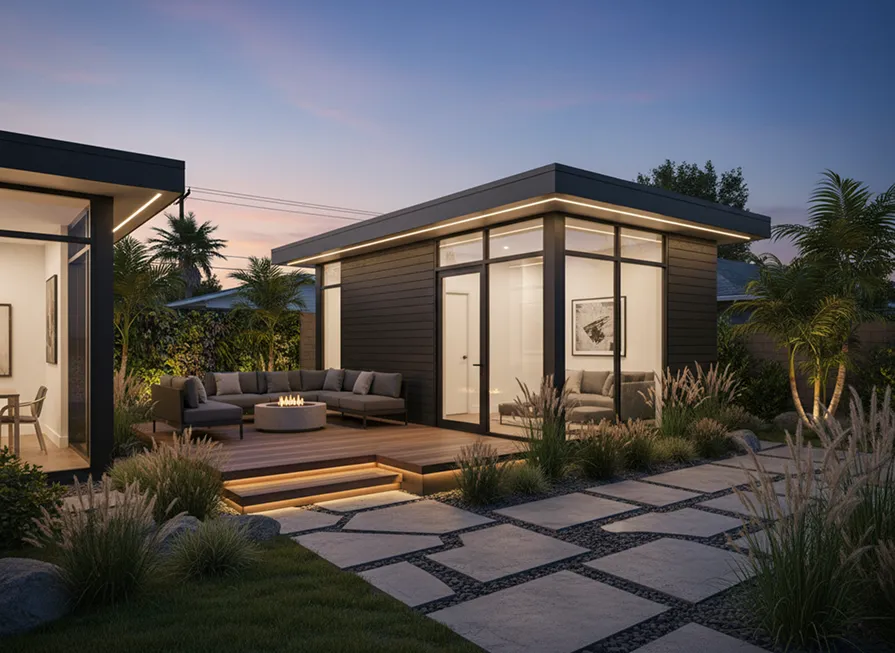
Detached ADUs
- Separate structure from the main house
- New foundations, utilities, and access
- Higher cost, higher resale and rental value
Attached ADUs
- Connected to the primary home
- Often built as side or rear extensions
- Can share utilities
Garage Conversions
- One of the most common ADU types
- Faster builds, lower structural work
- Still requires full code compliance
Junior ADUs (JADUs)
- Smaller units (often ≤500 sq ft)
- Built within the existing home
- More limited plumbing and kitchen setups
Permitting Basics (Before Local Rules Apply)
Permitting is where ADU projects differ most from standard remodels. While local regulations always apply, there are common patterns GCs should expect.
Typical ADU Permits Include:
- Planning or zoning approval
- Building permits
- Electrical, plumbing, and mechanical permits
- Utility connection approvals
- Fire and safety compliance
Common ADU Permit Considerations:
- Minimum and maximum unit size
- Setbacks and lot coverage
- Parking requirements (often reduced or waived)
- Owner-occupancy rules (varies widely)
- Utility metering requirements
Key takeaway: ADUs are regulated more like small homes than remodels. Early coordination with designers and local agencies is critical.
Why ADU Projects Require Tighter Project Management
ADUs may be smaller than full homes, but they are more complex than they look:
- Multiple inspections
- Separate scopes (foundation, utilities, finishes)
- High homeowner involvement
- Strict compliance timelines
This makes ADUs a poor fit for ad-hoc spreadsheets and disconnected tools.
How Eano Got an Early Start in ADU Construction
Eano began working with contractors focused on ADU construction early, when many tools were still built around traditional remodels or large commercial jobs.
That early focus shaped the software around how ADU projects actually run:
- Repeatable job templates
- Clear scope and proposal workflows
- Tight coordination between estimating and execution
- Simple tracking for permits, inspections, and tasks
ADUs are ideal candidates for standardized workflows, and Eano was built with that in mind.
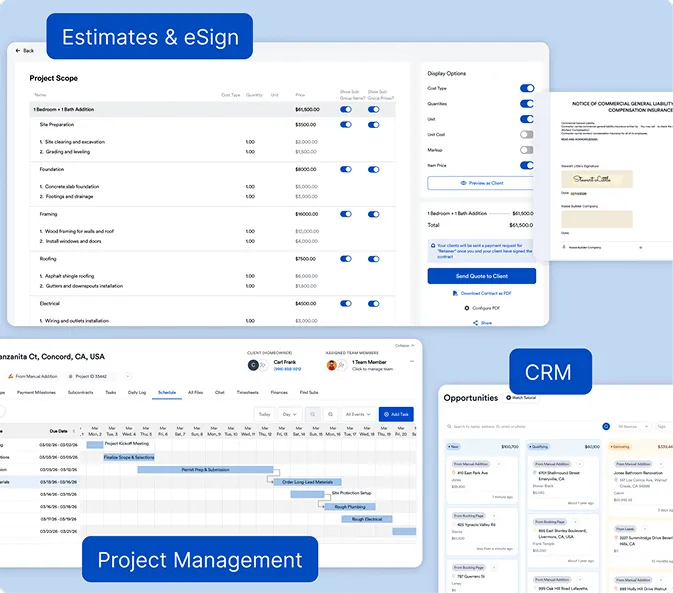
Why Eano Works Well for Managing ADU Projects
For general contractors building ADUs, Eano helps by:
- Turning estimates into structured ADU proposals
- Reusing templates across similar ADU builds
- Tracking tasks, schedules, and inspections in one place
- Keeping client communication clear and documented
- Managing multiple ADU projects without added overhead
Instead of reinventing the wheel on every project, teams can build consistency into their ADU pipeline.
Is ADU Construction Right for Your Business?
ADUs can be a strong fit if:
- You want repeatable, high-demand projects
- You’re comfortable navigating permitting
- You want predictable scopes and timelines
- You plan to scale beyond one-off remodels
They require discipline—but reward it.
Ready to Manage ADU Projects?
Building ADUs isn’t just another remodel category. It’s a distinct type of residential construction with its own rules, risks, and opportunities. For general contractors who understand the differences—and use systems designed to manage them—ADUs can become one of the most reliable and profitable parts of the business.
If you’re serious about ADU construction, get a demo of Eano Pro's specialized software for ADU construction.