
Why Construction Estimating Software Matters More for Small Businesses Than Big Ones
A bad estimate costs a large firm a bad month. For a small construction business, it can cost the year — there's rarely a second department to catch the mistake before it goes out the door.
The Estimating Edge That Puts Small Teams Ahead
Larger firms can absorb an estimating error: a dedicated estimator catches most mistakes before they go out, and there's enough volume that one underpriced job doesn't sink the quarter. Small contractors don't have that cushion. If the owner is also the estimator, the scheduler, and the person on-site running the crew, one wrong number in a bid isn't a rounding error — it's next month's payroll.
That's the specific gap dedicated estimating software closes. Not by making the math harder to get wrong in the abstract, but by removing the places small-shop estimates actually break: a takeoff done from memory instead of measurements, a markup applied inconsistently from job to job, a material price that's three months stale.
Why Manual Estimating Holds Small Businesses Back
A spreadsheet isn't the problem by itself — plenty of contractors ran profitable businesses on one for years. The problem is that every job has its own quirks: a unique scope, a price that changed since the last bid, a sub who's no longer available. With one person handling estimating alongside everything else, the odds of missing a line item climb every time volume increases, and there's no second set of eyes to catch it before the bid goes out.
A big company can spend extra to absorb an error or eat a rework cost. A small outfit generally can't — which is exactly why a system that catches mistakes before they go out is worth more, proportionally, to a five-person crew than to a fifty-person one.
How Eano Pro Approaches This
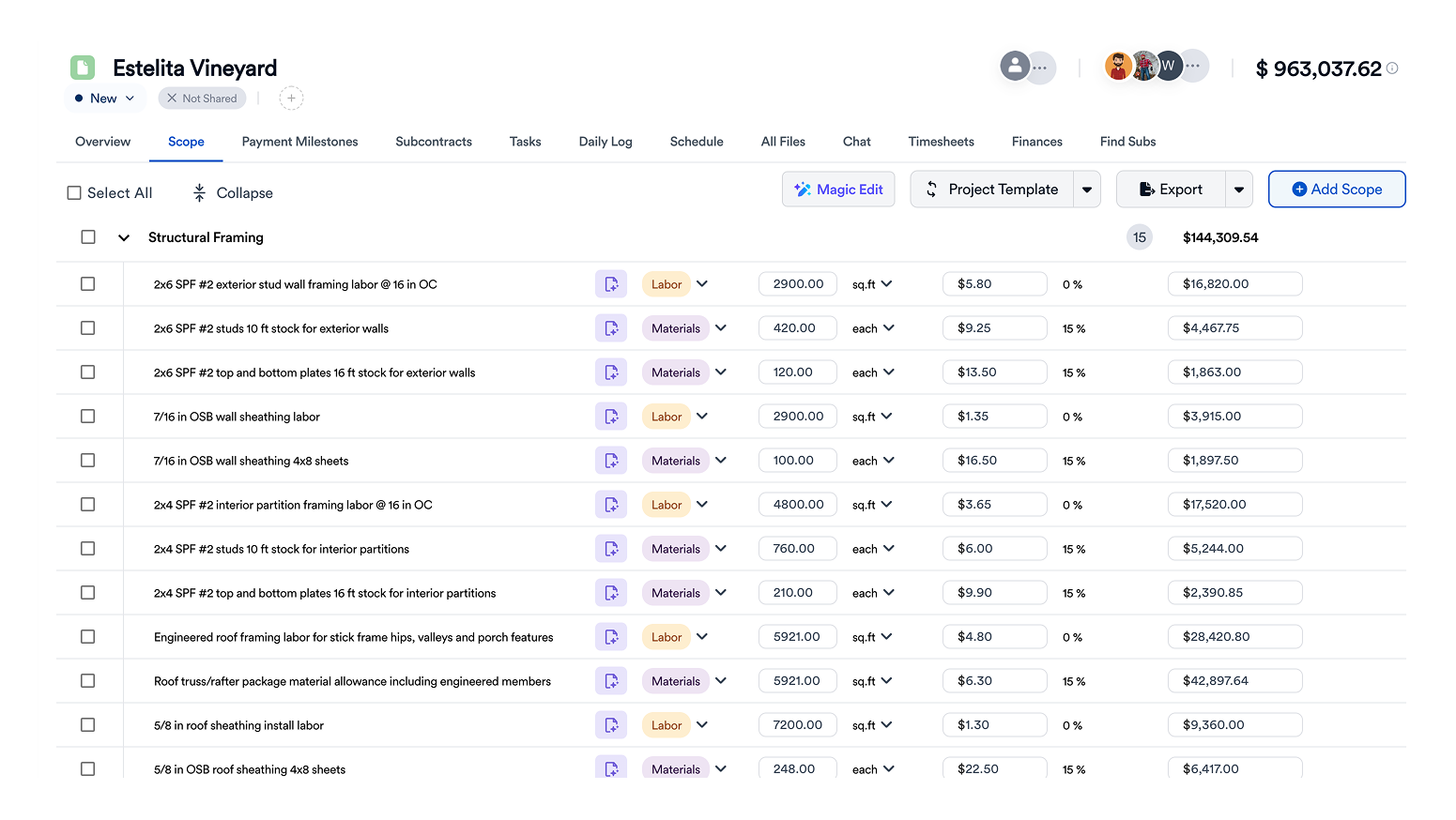
Eano Pro keeps templates, labor costs, materials, and markups in one place and editable in real time, so a bid doesn't require rebuilding the pricing logic from scratch each time. In practice, that's the difference between turning around a bid in hours instead of days — not because the software does the estimating for you, but because it removes the repetitive setup work that eats the time.
Because it's cloud-based, an estimate started at the office and finished from a truck stays in sync — no separate spreadsheet version floating around that might already be out of date by the time someone opens it. Because estimates are built from reusable templates and your own cost book, the work you put into one bid can carry forward to the next. Labor rates, material costs, markups, and scope details can be updated as pricing changes, giving you a more consistent starting point without rebuilding every estimate from scratch.
Why Leveraging Eano Pro AI Matters for Small Businesses
For a small contractor, AI is most useful when it takes work off the owner's plate. Eano Pro can help build estimates from a simple prompt, generate takeoffs from uploaded plans, and turn a project scope into a starting schedule. Instead of spending hours setting up the first draft, you can start with something structured and focus your time on reviewing quantities, adjusting pricing, and making sure the job reflects how you actually build.
That matters more when there isn't a dedicated estimator or project coordinator down the hall. AI doesn't replace the contractor's judgment, but it can handle more of the setup work that would otherwise compete with site visits, customer calls, and running active jobs.
What Accuracy Actually Buys You
The advantage isn't just speed — it's what a clean, consistent bid signals to a client comparing multiple proposals. A well-organized estimate with clear line items reads as more trustworthy than a lower number with no breakdown behind it, even before price becomes part of the conversation. Clients who can see where the money goes are more likely to trust the number they're being asked to sign.
For a small team specifically, that trust does double duty: it wins the job, and it reduces the follow-up questions and renegotiation that eat into the time a bigger firm would just delegate to someone else.
What Sets Small Contractors Apart
There's a real difference between running a project and running a business. A small business owner can't hand estimating off to a specialist team — they live with every number they put in front of a client. That's exactly why a system that makes estimating faster and more consistent has an outsized impact at this scale: it's not a convenience, it's the thing standing between a busy week and a costly mistake.
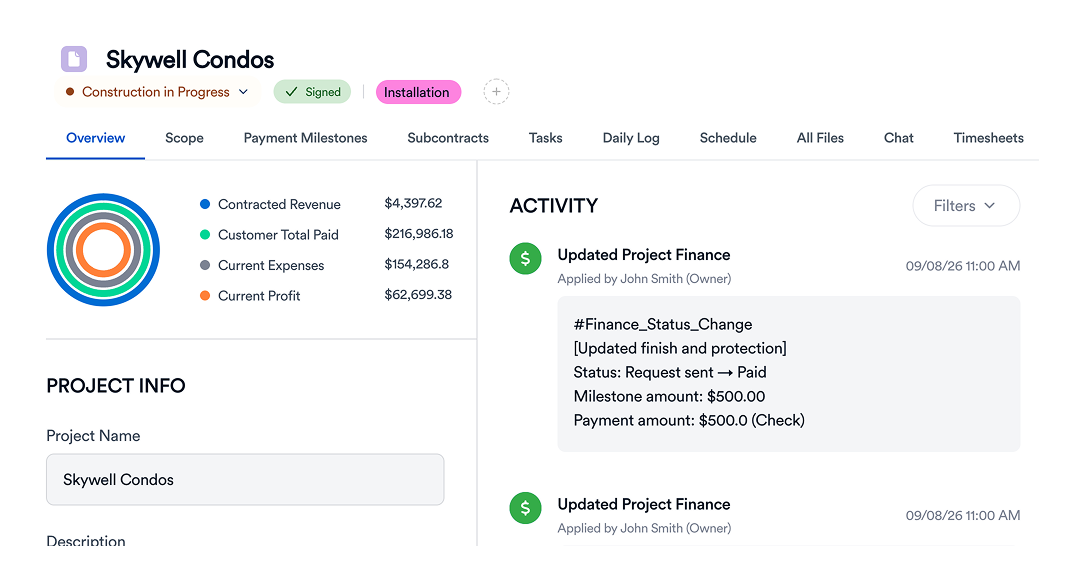
We're all here doing this to make a profit, so we need to measure how our estimate did compared to actuals, so Eano Pro allows us to apply costs, materials, expenses, and income, to check on overall job profitability.
What to Actually Look For
Not every estimating tool is built with a small shop's constraints in mind. Worth checking specifically: does it offer templates for the work you do most rather than a generic catch-all, can you adjust for local material and labor costs without a support ticket, and does it stay usable as the business adds a second or third estimator. Eano Pro was built around exactly those three questions, without requiring an IT department or a lengthy onboarding process to get value from it — you can see the platform at Eano Pro's estimating page.
The Bottom Line
Every hour spent wrestling with an estimate by hand is an hour not spent winning the next job or running the crew you already have. For a small construction business, the calculation isn't about keeping up with bigger competitors — it's about removing the single point of failure a manual process creates. Ready to see how it works for your business? Book a demo today.