CRM for Remodelers Who Want Predictable Revenue
Remodeling jobs move fast, and a missed callback or a lead that goes cold while you're on a roof somewhere can cost more than a single job — it can cost the referral chain that job would have led to. The contractors who avoid feast-or-famine cycles aren't the ones working harder; they're the ones who can actually see their pipeline.
That distinction matters because it reframes the problem. It's rarely a lack of leads that causes a slow quarter — it's leads that existed, got a first conversation, and then quietly disappeared somewhere between that call and a signed contract.
Why Predictable Revenue Matters for Remodelers
When every job runs on tight margins and tighter schedules, predictability is more than a luxury — it's what separates a business that grows deliberately from one that's constantly scrambling to fill the calendar. Remodelers who can forecast their pipeline, track leads, and keep jobs flowing are the ones who avoid dry spells and quiet seasons. Most of the time, the problem isn't a lack of leads — it's that leads get lost in the gap between a phone call and a follow-up that never happened.
The feast-or-famine pattern tends to be self-reinforcing, too. A busy stretch leaves no time for follow-up, so leads from that period go cold; a few weeks later, the calendar empties out because there was nothing in the pipeline behind the jobs that just wrapped. The fix isn't working harder during the busy stretch — it's not letting the follow-up work depend on having spare time in the first place.
Referrals make this pattern more expensive than it first appears. A remodeler's next job often comes from a happy client's neighbor or friend, which means a dropped lead isn't just one lost job — it's a lost introduction to whatever that lead's own network might have become. A pipeline that lets leads go cold quietly closes off referral paths nobody ever notices closing.
Streamline Your Pipeline with a CRM Built for Remodelers
Manual tracking — a notebook, a spreadsheet, a string of text threads — works fine until the volume of leads outpaces the time available to track them by hand. At that point, what a remodeling business needs isn't more discipline; it's a system that does the tracking automatically.
That threshold usually arrives quieter than expected. It's rarely a single dramatic missed lead that forces the change — it's a slow accumulation of small gaps that eventually adds up to a noticeably slower month, traced back after the fact to two or three leads that never got a second call.
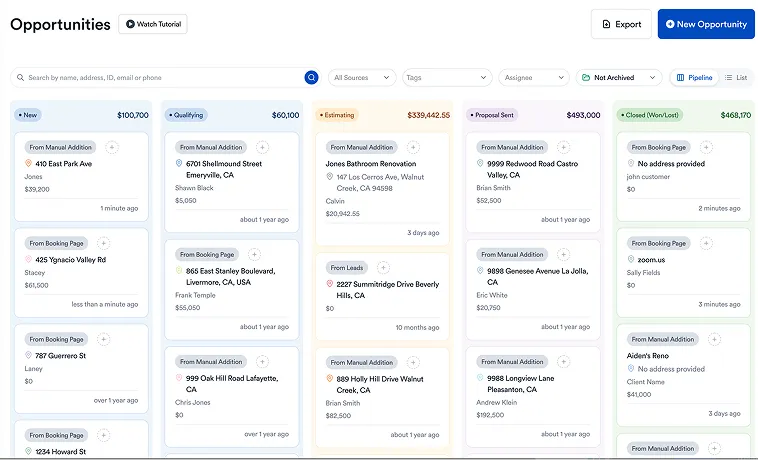
A dedicated platform brings every lead, estimate, and follow-up into one dashboard, so a Monday-morning check gives full visibility on pending deals, active jobs, and overdue tasks — not a guess based on what you remember from last week's calls.
The real payoff isn't organization for its own sake. It's closing deals faster because nothing sits untouched, and freeing up time that used to go to babysitting an inbox so it can go toward the work itself.
There's also a compounding benefit that shows up over months rather than days. A pipeline that's actually visible makes it possible to spot a slow season coming weeks in advance — not just react to it once the calendar is already empty. That lead time is what turns "we need to hustle for work" into "we already know March is light, so let's push harder on estimates in January."
The manual approach also makes it hard to tell the difference between a business problem and a follow-through problem. A quiet month might mean genuinely fewer people are asking for quotes — or it might mean the same number of people asked, and half of them never heard back. Those two situations call for completely different responses, and a notebook or scattered text thread rarely makes clear which one is actually happening.
How Eano Pro Supports Remodelers' Revenue Goals

Eano Pro brings contacts, bids, and communications into the single view shown above — every job's status, which prospects need a follow-up, and how much revenue is forecasted for the month, all in one place instead of scattered across a phone, a notebook, and a spreadsheet.
Because the platform tracks each lead from the first phone call through a signed contract, nothing depends on someone remembering where a project stood two weeks ago. That matters more than it sounds: the gap between "I think that lead is still warm" and knowing for certain is exactly where deals go cold.
The learning curve is intentionally shallow — if you can run a jobsite, the interface is built to be usable without a training session, and your team knows who's responsible for each next step without a separate conversation about it.
For remodelers trying to avoid the feast-or-famine cycle specifically, visibility into which jobs are closing soon, which bids are still open, and which clients are due for a check-in is what turns an unpredictable pipeline into a manageable one — steadier work, steadier cash flow, fewer surprises at the end of the month.
Past clients are an underused part of that visibility, too. A remodeler who's completed a kitchen renovation is a reasonable candidate for a bathroom project down the line, or a referral to a neighbor doing the same. Eano Pro keeps completed jobs and past clients in the same system as active leads, so a check-in reminder for a client six months out doesn't depend on someone remembering to set a personal calendar note.
What Makes Remodeling Workflows Different From a Generic CRM

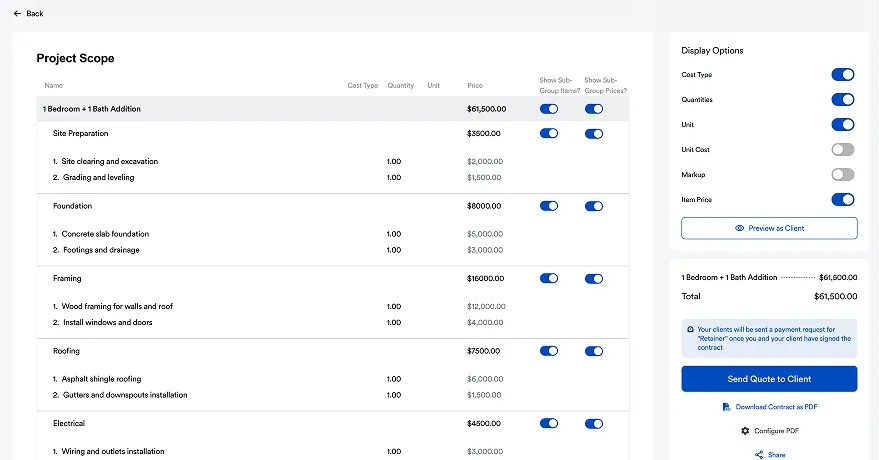
A general-purpose CRM built for retail or software sales doesn't have a native concept of a change order, a punch list, or a client approval step — the specific stages a remodel actually moves through. Built around those steps instead of around a generic sales pipeline, Eano Pro lets a team assign tasks so everyone knows what's next, track documents, estimates, and photos against each project, and get reminders tied to real dates rather than a generic "follow up in a week."
None of that adds steps to the process — it removes the step where someone has to remember what the process even was. Clearer process is what makes revenue more predictable, not more paperwork.
The gap between a generic pipeline and a remodel-specific one shows up clearest at the handoff points — the moment a signed contract becomes an active job, or a punch-list item becomes a final invoice. A generic CRM treats those as the end of its job; Eano Pro treats them as the middle of one continuous record, which is why nothing has to be manually recreated when a deal closes.
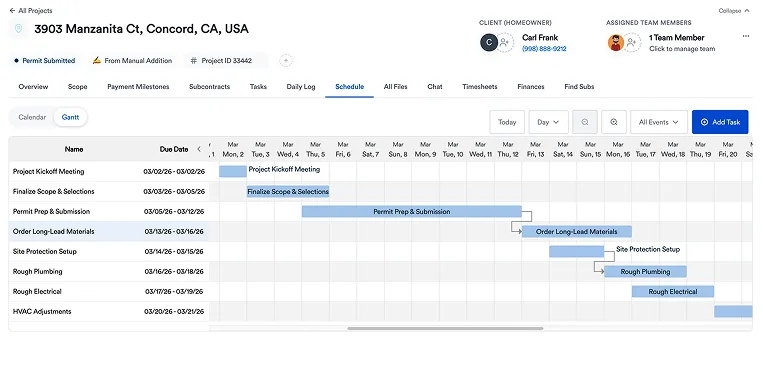
The scheduling view above is a useful example of why a remodel-specific tool matters more than it seems. A generic sales pipeline has no concept of task sequencing — demo before framing, framing before drywall — but a remodel absolutely does, and a schedule that doesn't understand that ordering isn't actually managing the job, just listing it.

Choosing the Right Platform for Your Remodeling Business
Not every CRM sold as "built for contractors" was actually designed around a remodel's day-to-day. What matters in practice: does the pipeline view show real status at a glance, is every stage from lead to signed contract actually tracked (not just logged after the fact), and can someone get productive without hours of setup or training. Eano Pro was built around those three answers specifically, for remodelers who don't have spare hours to spend configuring a tool that doesn't fit how they already work.
It's worth testing this in practice rather than taking a features page at its word. A useful question to ask during any demo: can you see, right now, which leads have gone quiet longer than they should have? If the answer requires filtering through several screens or exporting a report, the tool is closer to a records system than an actual pipeline view.
Price matters too, but less than most remodelers expect going in. The real cost of a CRM isn't the subscription — it's the time spent maintaining it. A tool that requires constant manual updating to stay accurate ends up costing more in labor than it saves, no matter how cheap the license is. The better question is how much of the tracking happens automatically versus how much still depends on someone remembering to log it.
What Predictable Revenue Actually Looks Like Day to Day
Predictable revenue doesn't mean the same amount of work every single week — remodeling doesn't work that way, and no software changes that. What it means in practice is knowing, with reasonable confidence, what the next six to eight weeks look like: which bids are likely to close, which jobs are wrapping up and need a next project behind them, and which past clients are due for the kind of check-in that turns into a referral or a repeat job.
That kind of visibility changes how a business plans, not just how it reacts. Hiring a new crew member becomes a decision based on a visible pipeline instead of a hopeful bet. Turning down a marginal job becomes possible because there's confidence something better is already in the pipeline behind it, rather than turning down work out of fear the calendar goes empty otherwise.
It also changes the conversation with a client. A remodeler who can say with confidence when a crew will actually be available — because the schedule reflects real, current commitments rather than an optimistic guess — sounds more credible than one who has to check with three other people before answering. That credibility shows up in close rates in a way that's hard to measure directly but easy to notice once it's there.

Get Started with a CRM Built for Remodelers
Moving from scattered paperwork to a reliable pipeline doesn't require overhauling how you run jobs — it requires a system that tracks what you're already doing, automatically. A CRM built for remodelers gives you that visibility without adding admin work on top of an already full schedule.
Most remodelers who make the switch describe it less as adopting new software and more as finally being able to answer, without checking three different places, the one question that actually determines whether the next month is going to be busy or slow.
Book a quick demo to see how Eano Pro tracks a pipeline end to end: Schedule your demo here.