What Does CRM Stand for in Construction (And How Contractors Use It)
Staying on top of every lead, client update, and project detail is no small task for contractors. According to a recent survey by JBKnowledge, 40% of construction firms still rely on manual processes for client management—costing them valuable time and money.
How Contractors Keep Track of Clients and Projects
Managing relationships and information in construction isn’t just about remembering names and numbers. It’s about keeping every interaction, document, and update organized so nothing slips through the cracks. For many contractors, the process can be messy—spreadsheets, sticky notes, and endless email chains.
But the stakes are high. Missing a client’s request or losing track of a bid can mean lost business. That’s why more contractors are looking for a solution that keeps them organized without adding more headaches.
What Does CRM Stand for in Construction?
If you’ve ever asked, what does CRM stand for in construction, you’re not alone. In simple terms, CRM stands for Customer Relationship Management. In the construction world, CRM is a system or software that helps contractors manage their interactions with leads, clients, and partners—all in one place.
CRM for construction isn’t just about sales. It’s about tracking new opportunities, managing project communications, and making sure every client feels taken care of throughout the job. Instead of juggling scattered notes or digging through old emails, a CRM puts everything at your fingertips.
The Benefits of Using CRM in the Construction Industry
A strong CRM helps contractors:
- Track new leads and manage follow-ups
- Log project updates and communications
- Improve response times and cut down on errors
These benefits translate to more winning bids, fewer dropped balls, and better client satisfaction. Contractors who use a dedicated CRM report smoother project handoffs and clearer accountability across teams.
Practical Ways Contractors Use CRM Solutions
Construction companies use CRM software differently than many other industries. Instead of managing a simple sales pipeline, contractors often need to coordinate estimates, site visits, proposals, change requests, schedules, subcontractors, and ongoing client communication—all while projects are actively moving.
A construction CRM becomes the central record for every customer. Rather than hunting through text messages, emails, or handwritten notes, anyone on the team can quickly see where a project stands and what needs to happen next.
Some common ways contractors use CRM software include:
- Tracking new leads from websites, referrals, and phone calls
- Scheduling walkthroughs and site visits
- Recording measurements, photos, and project notes
- Creating estimates and proposals
- Following up on unanswered quotes
- Managing signed contracts and change orders
- Logging client conversations throughout the project
- Keeping warranty information and maintenance reminders organized
This level of organization becomes even more valuable as a business grows. What works with five active jobs often starts breaking down when you're managing twenty or fifty at the same time.
Common Signs You've Outgrown Spreadsheets
Many contractors don't decide to implement a CRM because they suddenly love software—they do it because their existing process stops working.
You may have outgrown spreadsheets or paper-based systems if you find yourself:
- Forgetting to follow up with potential customers
- Searching through emails to find conversations
- Entering the same customer information multiple times
- Losing track of estimates that were never approved or declined
- Wondering who last spoke with a client
- Having office staff and field crews working from different information
These issues don't just create frustration. They can directly impact close rates, customer satisfaction, and profitability.
Why Construction Businesses Need More Than a Generic CRM
While many general-purpose CRM platforms exist, construction companies often need capabilities that extend well beyond basic contact management.
Instead of stopping after a deal is won, contractors typically need software that continues supporting the project through completion.
That often includes:
- Estimating and proposal creation
- Contract management
- Project scheduling
- Daily logs
- Change orders
- Budget tracking
- Team communication
- Invoice and payment management
- Document and photo storage
Having these tools connected reduces duplicate data entry and gives everyone—from sales to project managers—a single source of truth.
Introducing Eano Pro: CRM Built for Contractors
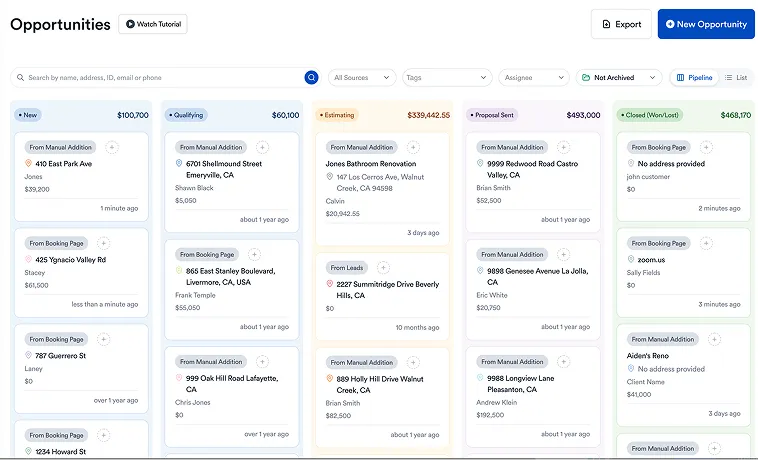
Eano Pro combines customer relationship management with the tools contractors use every day to run projects.
Instead of managing leads in one platform, estimates in another, and project management somewhere else, everything stays connected from the first phone call through final payment.
Within a single workspace, contractors can:
- Track every lead from inquiry to signed contract
- Create AI-powered estimates and proposals
- Store photos, files, and client communications
- Manage schedules, tasks, and project milestones
- Monitor budgets, invoices, and job profitability
- Coordinate office staff and field crews using the same information
Because everything lives in one system, there's less duplicate work and fewer opportunities for important details to fall through the cracks.
How to Choose the Right Construction CRM
Not every CRM is built the same. Before choosing one, consider how well it fits the way your business actually operates.
Look for software that offers:
- An interface that's easy for both office staff and field crews
- Mobile access from the jobsite
- Construction-specific estimating and proposal tools
- Project management features beyond simple contact tracking
- Integrations with accounting software
- Automated reminders and follow-up workflows
- Reporting that helps measure sales performance and project health
The right CRM should reduce administrative work—not create more of it.
Making CRM Part of Your Daily Workflow
Simply purchasing CRM software won't transform a business overnight. The biggest improvements come when the entire team consistently uses the system.
Successful contractors often develop simple habits such as:
- Logging every new lead immediately
- Recording phone calls and meeting notes
- Updating project status after every milestone
- Scheduling follow-up reminders before closing each conversation
- Keeping all project documents attached to the customer record
These small habits create a complete history for every customer and make it much easier for team members to step in whenever needed.
The Bottom Line
If you've ever asked, what does CRM stand for in construction, the answer goes well beyond Customer Relationship Management.
A modern construction CRM helps organize the entire customer journey—from the first inquiry to the final walkthrough and beyond. It keeps communication organized, helps teams stay accountable, reduces administrative work, and creates a better experience for both contractors and homeowners.
As construction businesses continue adopting digital tools, CRM software is becoming less of a competitive advantage and more of an operational necessity.
Platforms like Eano Pro take that concept even further by combining CRM, estimating, proposals, scheduling, project management, financial tracking, and AI-powered productivity tools into a single construction-focused platform.
Whether you're looking to improve follow-up, close more jobs, or simply spend less time searching for information, investing in the right construction CRM can pay dividends across every stage of your business.
Ready to See Eano Pro in Action?
Managing clients shouldn't require juggling spreadsheets, notebooks, text messages, and disconnected software.
Book a personalized demo to see how Eano Pro helps contractors organize leads, generate estimates, manage projects, and keep every client interaction in one place. Whether you're a growing remodeling company or an established general contractor, you'll see how a construction-focused CRM can simplify your daily operations and help your team work more efficiently. Schedule your demo here.