Back of the Napkin Estimates for Construction
We've all heard it before.
"Yeah, I can get you a number."
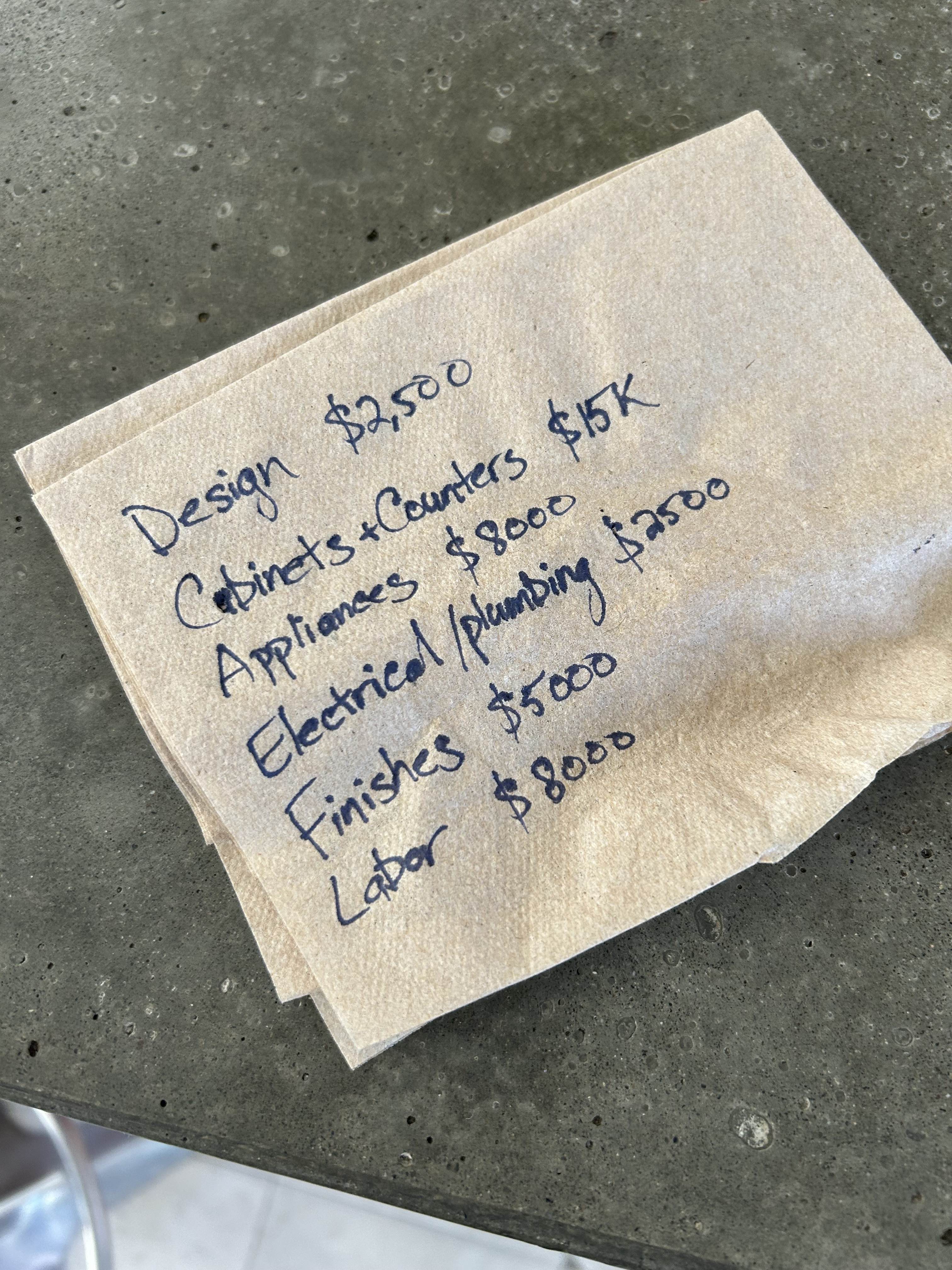
Grabs napkin.
Starts scribbling.
The classic napkin estimate. It's practically a construction tradition.
And to be fair, sometimes that's how jobs start—quick math, rough scope, ballpark pricing. But the problem is what happens next. That scribbled number turns into a PDF. The PDF turns into revisions. The revisions turn into confusion. And suddenly your "quick estimate" is costing you hours.
In the video, I literally use a picture of a napkin estimate to show how far we've come.
The Problem With Napkin Math
Napkin estimates aren't wrong because they're simple. They're risky because they're disconnected.
There's no:
- Standardized pricing
- Clear scope breakdown
- Revision tracking
- Audit trail
Once that number leaves your hand, it's hard to control what happens to it. Someone photographs it, texts it to a partner, and three weeks later it's the number everyone remembers — even though it was never meant to be more than a starting point for a conversation.
And when margins are tight, guessing isn't a strategy. KPMG International's Global Construction Survey found that only 31% of respondents' projects came in within 10% of their budgeted cost over a recent three-year stretch. A napkin number, by design, has no real scope breakdown behind it — which means it's usually the first domino in a chain that ends with a project running over.
Why the Napkin Sticks Around
It's worth admitting the napkin estimate exists for a reason. A homeowner standing in a kitchen wants some sense of the number before they'll commit to scheduling a formal walkthrough, and an experienced estimator genuinely can eyeball a lot of jobs close enough to be useful in that moment. The instinct isn't the problem.
The problem is what happens after that number gets said out loud. Once a client hears a figure — even one prefaced with "very roughly" — it tends to anchor their expectations for the rest of the process. If the real, detailed estimate comes in meaningfully higher once the scope is actually worked out, the contractor is now explaining an increase instead of presenting a number for the first time, which is a much harder conversation to have.
The Modern "Napkin" Is AI
Instead of scribbling numbers, modern contractors are using AI-assisted estimating.
With Eano Pro, you can take rough project details and quickly generate structured line items, organized scopes, and consistent pricing—without rebuilding everything from scratch.
It's still fast.
It's still flexible.
But now it's trackable, editable, and tied directly into your proposal workflow.
What used to take 45 minutes of typing and formatting can take minutes—and the result is something your team can actually build from.
The difference isn't really about speed for its own sake. A napkin number and an AI-generated estimate can both be produced in a minute or two — the real gap is what's behind the number once it exists. One is a guess with nothing supporting it; the other is a structured set of line items, quantities, and pricing that an estimator can immediately start refining, rather than reconstructing from memory later that afternoon.
Fast Doesn't Have to Mean Sloppy
There's nothing wrong with thinking on your feet. Contractors have to.
But your estimating process should grow with your business. The "back-of-the-napkin" mindset might win a conversation—but structured, AI-powered estimating wins the job and protects the margin.
The best part? You still move fast. You just don't lose control of the numbers.
That distinction matters more as a business adds estimators. One experienced owner can eyeball a job and usually be close. A newer hire doing the same thing, without years of pattern-matching to draw on, is far more likely to be wrong in a way nobody catches until the job is already underway. A structured process — even a fast one — gives a less experienced estimator the same guardrails a veteran carries around in their head.
What Actually Breaks When the Napkin Leaves Your Hand
Here's the part nobody talks about.
It's not the number itself. Experienced estimators are usually close.
It's what happens to that number once it's out of your control.
No file. No version. No record of what was actually included — or, just as often, what wasn't.
Fast forward three weeks. The client remembers "about $40K." You remember "$40K, but that didn't include the deck." Guess which version wins that argument.
That's not a pricing problem. That's a documentation problem. And it's the exact problem structured estimating solves — not by slowing you down, but by giving the fast number somewhere real to live.
Turning a Rough Number Into a Real Proposal
A fast estimate is only half the job. The other half is getting from that number to something a client can actually review and sign without a week of back-and-forth. Eano Pro's estimating tools connect directly into proposal generation, so a structured estimate doesn't have to be retyped into a separate document before it can go out the door. For a closer look at building that side of the process well, see Eano Pro's guide to building clear, client-ready estimates.
If you want to see the napkin-to-AI transition in action, watch the video above. And if you're ready to retire the paper napkin for good, book a demo and see how simple modern estimating can be.
BTW: No tricks here. Just the napkin. Try it out for yourself.

.webp)